

Expert Guide to Swing Bed Materials
The Expert Guide to Porch Swing Bed Materials
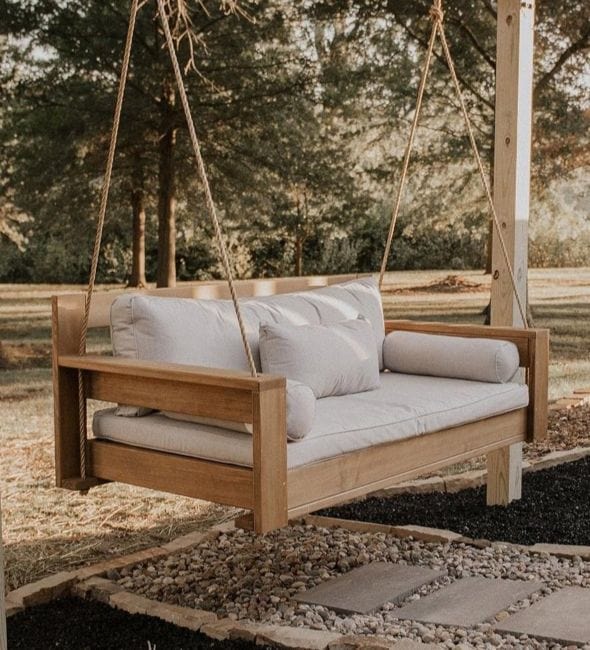
Choosing the right material for a porch swing bed comes down to four factors: structural weight capacity, resistance to the elements, ceiling load, and ongoing maintenance. A swing bed must safely support a heavy mattress and your family and pets while enduring outdoor humidity and weather.
Not all lumber performs equally under these stresses. Based on real-world durability our years of experience evaluating and selling daybed swings, here is how the top swing bed materials stack up - and which species to avoid.
1. Best Overall Value & Structural Strength: Pressure-Treated (PT) Pine
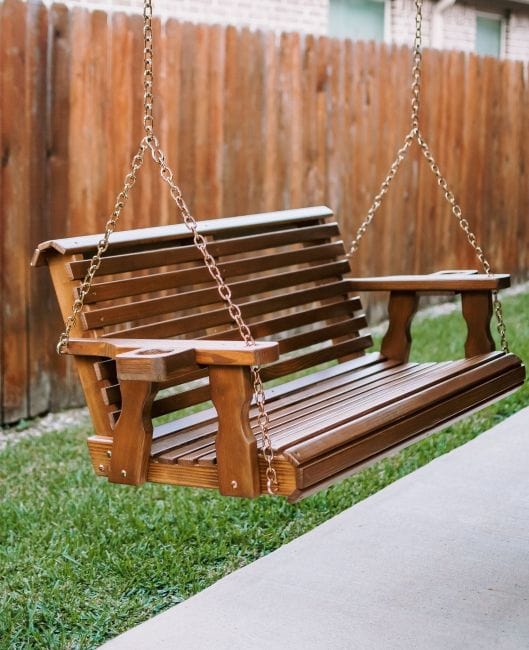
For maximum weight capacity at an accessible price point, Pressure-Treated Southern Yellow Pine is the industry benchmark.
-
Structural Strength: Southern yellow pine is exceptionally dense. It handles the continuous movement, swaying, and shifting of multiple adults without structural fatigue or joint strain.
-
Weather & Rot Resistance: Factory-infused preservatives protect the core of the timber from rot, fungal decay, and insect damage.
-
The Trade-Off: Pressure-treated pine is heavy, requiring verification of your ceiling joist capacity. As it seasons outdoors, it may develop minor surface checks (hairline cracks), which are purely cosmetic and do not compromise strength. We will recommend regular refinishing of pressure treated pine in order to keep its weather-fastness and keep it looking new.
2. The Premium Luxury Choice: Grade-A Teak
If your swing bed will be fully exposed to rain, snow, and direct sunlight, grade-A teak is the ultimate investment.
-
Unmatched Longevity: Packed with natural silica and dense oils, teak is virtually impervious to water absorption, rot, and pest damage.
-
Low Upkeep: Requires zero sealing to maintain structural integrity. Left exposed, it develops a classic silvery-gray patina while retaining its smooth finish and immense strength.
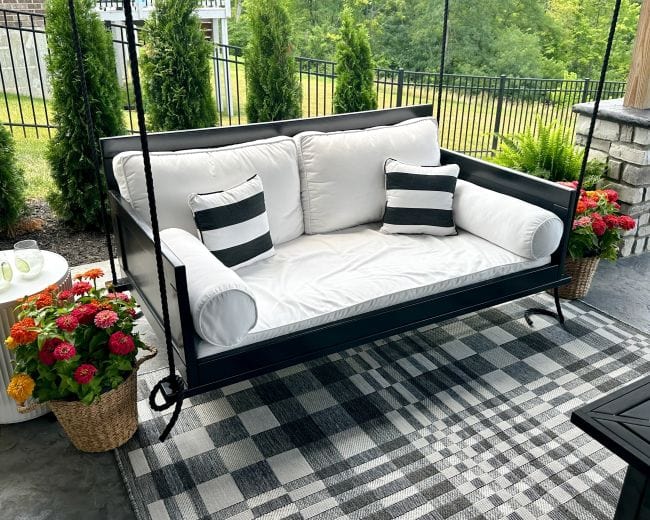
3. Best Lightweight, Modern or Coastal Option: Powder-Coated Aluminum
For homeowners in salt-air coastal regions or those looking for a sleek, modern aesthetic with the absolute lightest weight on their porch framing, aluminum is the top material choice.
-
Rustproof & Weather-Resistant: Unlike iron or steel, aluminum naturally forms a protective oxide layer that prevents rusting. When finished with an architectural-grade powder coat, it will not rust, rot, swell, or peel, even when exposed to salt fog and coastal humidity.
-
Maximum Strength with Minimum Weight: Aluminum boasts the highest strength-to-weight ratio of any swing bed material. It delivers rigid structural support for heavy mattresses and multiple adults while weighing a fraction of Pressure-Treated Pine or Poly Lumber, significantly reducing static strain on your ceiling joists.
-
Zero Maintenance: Requires no staining, painting, or structural sealing. A simple wash down with mild soap and water keeps it looking new indefinitely.
4. The Zero-Maintenance Synthetic: Metal-Reinforced Poly Lumber (HDPE)
For a complete "set-it-and-forget-it" option that requires no sanding, staining, or painting, High-Density Polyethylene (HDPE) is the premier synthetic option.
-
100% Weatherproof: Poly lumber will never rot, splinter, crack, or absorb moisture, making it ideal for high-humidity or coastal environments.
-
Check For Metal Reinforcement: Poly lumber is heavy and naturally flexible. A quality poly swing bed must feature aluminum or stainless steel support. Without this metal support, 5-foot and 6-foot poly spans will bow and sag under mattress and passenger weight over time.
5. Low-Maintenance Real Wood: Authentic Western Red Cedar
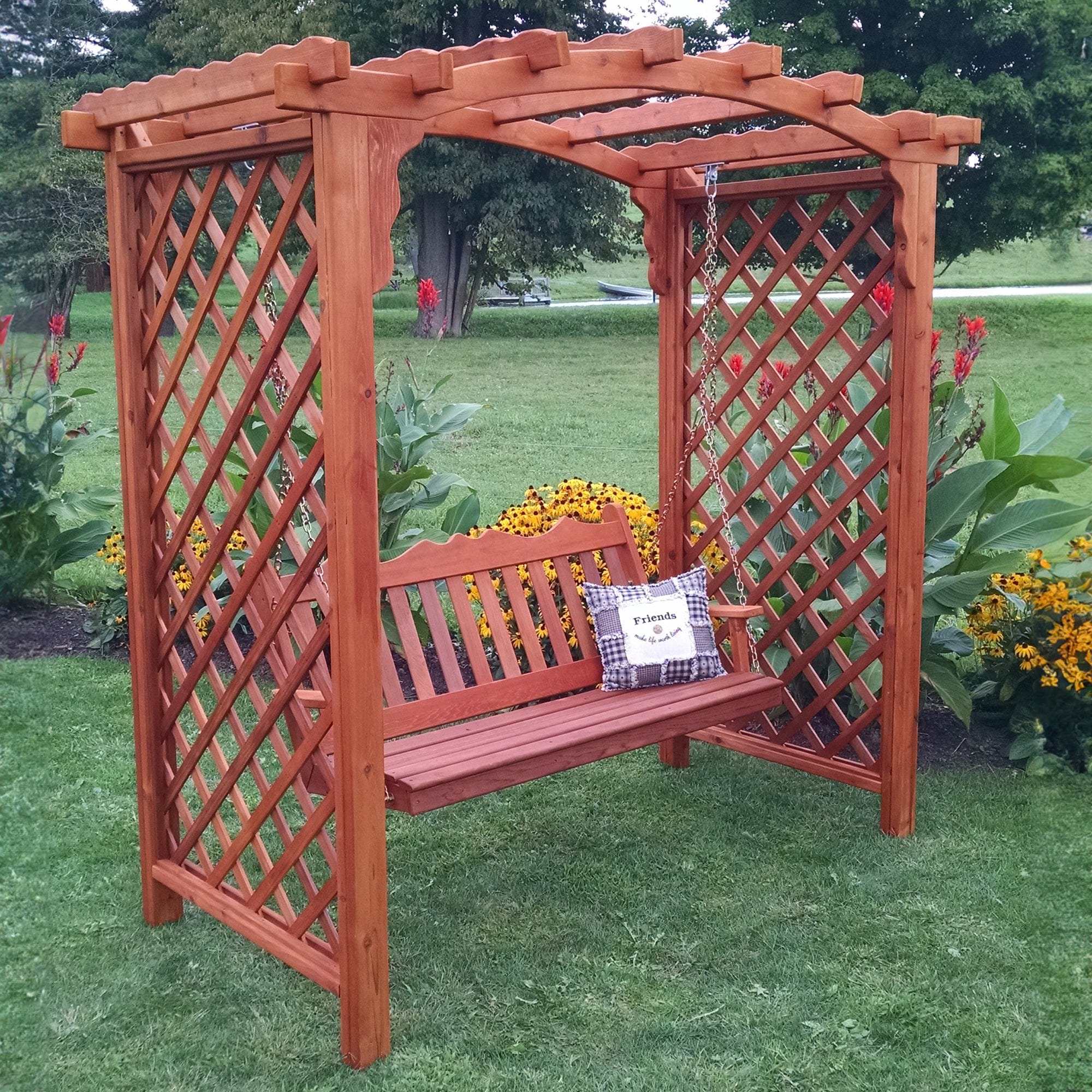
For homeowners who want the warmth of real timber without the chemical treatments or heavy weight of PT Pine, Western Red Cedar (WRC) is an ideal natural choice.
-
Low Maintenance & Weathering: Rich in organic tannins and natural oils, Western Red Cedar naturally repels moisture, rot, and insects. It can be left unstained to weather into a soft silver patina with minimal upkeep.
-
Lightweight Ceiling Advantage: WRC has an outstanding strength-to-weight ratio. It weighs significantly less than PT Pine or Poly Lumber, drastically reducing the dead-weight strain on your porch's overhead framing.
-
Dimensional Stability: WRC resists cupping, warping, and twisting far better than soft pine or cheap timber imports, keeping joint connections tight over time.
Materials to Avoid for Swing Beds
Budget marketplaces often recommend low-cost lumbers that fail under heavy swing bed demands:
-
Imported "Chinese Cedar" & Cheap Softwoods: Many budget retailers list items as "Cedar," but actually use imported Fir or Cunninghamia lanceolata (Chinese Cedar). These low-density woods lack the structural integrity of authentic Western Red Cedar and are highly prone to cracking or splitting under dynamic loads.
-
Budget "Mahogany" (Shorea / Luan): Fast-growing plantation "mahogany" imports lack the protective oils of Genuine Honduran Mahogany. They absorb moisture quickly, warp in direct sun, and require exhausting annual sanding and re-sealing to prevent finish peeling. If the product does not specify which type of mahogany wood is being used, you may end up with a lesser product.