Skip to content

Cart

Your cart is empty

Metal Patio Swings

Browse metal patio swings for outdoor seating that fits your porch or patio. Compare dimensions and seating capacity with your available space, and review each swing’s installation requirements, including any needed support or hardware, before choosing an option for your outdoor setup.

Sort By

Metal Patio Swings

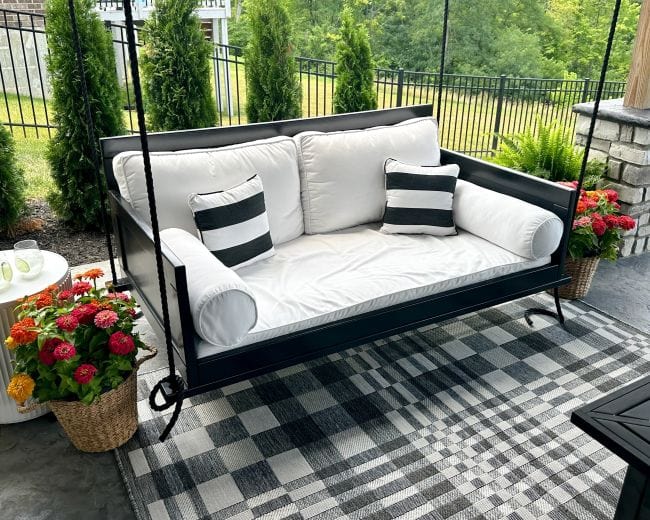
Metal patio swings bring the familiar comfort of a swinging seat to outdoor spaces with a look that can range from crisp and understated to decorative and traditional. Slender rails, open backs, curved arms, and scrollwork give metal designs their character without requiring a bulky frame. On a brick patio, a simple bench-style swing can sit comfortably alongside planters and a small side table; on a covered porch, a more ornamental design can echo the lines of a railing or entry door. The material beneath the finish makes a difference in how the swing feels and functions. Steel is commonly chosen for its strength and substantial feel, while aluminum is generally lighter and easier to reposition when the design allows. Wrought iron has a distinctive, weighty presence, though the term is sometimes used loosely to describe an ornamental style, so the stated construction matters more than appearance alone. Protective finishes help preserve the metal, but no finish eliminates the need for basic care. Comfort depends just as much on the shape of the seat as on the frame material. A gently contoured seat, a supportive back angle, and arms positioned at a comfortable height can make the difference between a quick pause and a long conversation. Slatted and mesh-style surfaces create different seating experiences, and some designs are intended to be used with cushions. A firm seat may suit someone who prefers upright support, while a deeper seat with an appropriate cushion can feel more relaxed. For couples sharing coffee, a parent sitting beside a child, or someone settling in with a book, the best fit balances room to move with an easy, natural sitting position. Decorative details deserve a practical look, too: smooth armrests and thoughtfully finished edges are easier to live with than features that catch clothing or make it awkward to settle into the seat.

A metal patio swing needs space for more than its frame. The full footprint includes its movement, the route people take around it, and enough room to sit down or stand up without stepping into another piece of furniture. A patio corner that looks generous when empty can become tight once a swing moves forward and backward. Seat width also tells only part of the story; overall width may include broad arms, suspension points, or an independent support frame. Seat depth and back height affect comfort, while seat height influences whether a person can place both feet comfortably on the ground. These details are especially useful when choosing seating for people of different heights or for someone who finds low seats difficult to use. Hanging swings and freestanding swings have different installation requirements. A hanging design requires a properly evaluated structural support, compatible suspension components, and installation that follows the manufacturer’s directions. Decorative ceiling trim, an ordinary overhead board, or an unverified beam should never be assumed to carry a moving load. When the support structure is uncertain, an assessment by a qualified professional helps establish whether the location is suitable. A freestanding design avoids attachment to the building, but its base still needs the level, stable surface and clearances specified for that frame. Weight capacity applies to the complete setup, not just the seat, and should account for everyone using it together. Chains, connectors, hangers, and stands must be compatible with the intended configuration. Within those practical boundaries, placement shapes the experience: facing a garden bed creates a quiet focal point, while angling the seat toward other seating encourages conversation. Nearby doors should open freely, and the swing’s path should remain separate from walkways, steps, and children’s play areas. A side table works best within comfortable reach but beyond the moving seat’s clearance. For households with children, the swing is seating rather than play equipment; gentle use and appropriate supervision help keep a relaxed gathering from turning into unsafe climbing or rough swinging.

Care for metal patio swings starts with knowing both the base metal and the finish. Powder-coated surfaces, painted finishes, and other protective treatments can have different cleaning and touch-up requirements, so the manufacturer’s instructions should guide routine maintenance. A soft cloth or sponge, mild soap when approved, and thorough removal of cleaning residue are often more appropriate than abrasive pads or aggressive chemicals. Crevices around decorative work, joints, and the undersides of arms can collect debris that deserves attention during cleaning. Drying accessible surfaces afterward helps prevent lingering moisture, especially around connections. Steel and iron can develop rust where a protective coating is damaged, making small chips worth addressing with a compatible repair method rather than ignoring them. Aluminum does not rust in the same way as iron, but its surface and finish can still deteriorate, and attached hardware may be made from another metal. Periodic checks for loose fasteners, worn suspension components, cracks, and changes in alignment help identify issues before continued use makes them worse. Any part that appears damaged should be evaluated and repaired or replaced according to the manufacturer’s guidance before the swing is used again. Cushions introduce another layer of comfort and care: their dimensions should suit the seat without crowding the arms, and ties or other attachments should be used only as intended. Removable covers can simplify cleaning when their care labels permit it, while a dry storage location helps keep cushions ready for use. Visually, a swing can anchor a coordinated seating area without every piece matching exactly. Pairing its finish or repeating a curved detail in surrounding Metal Patio Furniture creates continuity. For a housewarming or retirement gift, confirming the recipient’s space, preferred seating feel, and installation plans matters more than choosing an elaborate design. A well-fitted swing becomes a place for everyday rituals: reading a few pages, talking after dinner, or enjoying a quiet moment beside someone familiar.